How AI Is Changing Creative Agencies in Africa (And Why That’s a Good Thing)
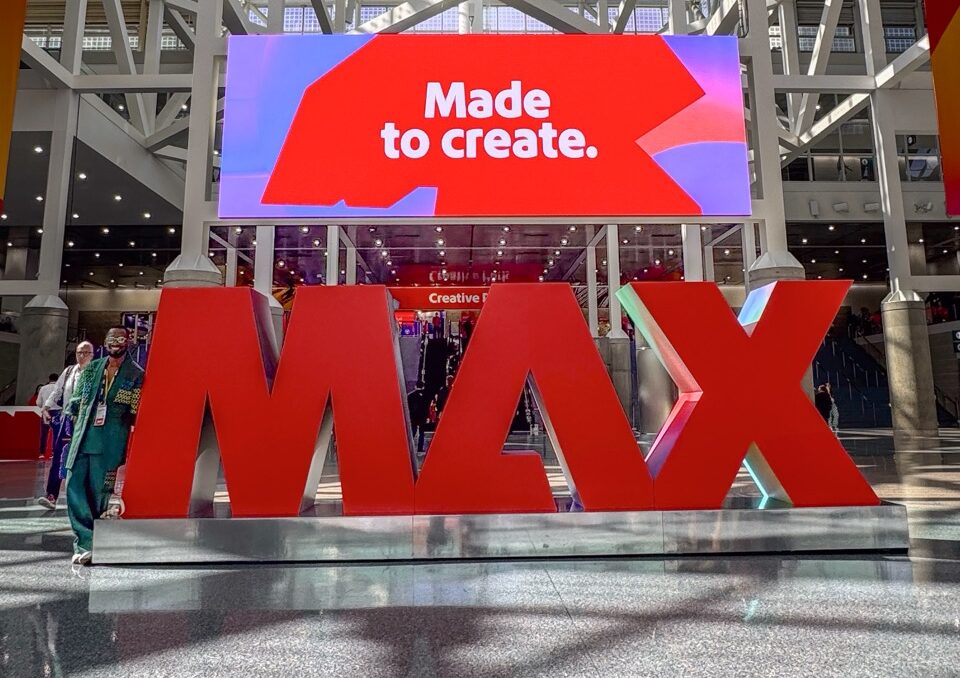
I’m one of 35 Adobe AI VIP members in the world. The only one from Africa.
That didn’t happen overnight. Earlier in 2025, I shared a creative workflow with Adobe’s team that caught fire internally. It went viral inside the company, and they invited me to kick off what became Adobe Community Currents, a series where I presented my workflow to over 70 teams across multiple departments. More than 200 people ended up watching it. After the session, the team told me I had “set the bar very high” for the series. Three more speakers followed, but apparently that first one stuck.
A few months later, that feeling has only gotten stronger. AI is everywhere in our industry now. Not as a threat. Not as a gimmick. As a tool that, when used with intention, makes everything we do faster, sharper, and more impactful. The studios that understand this are pulling ahead. The ones still debating it are getting left behind.
Africa doesn’t need to catch up. We just need to keep going.
At VOME, we’ve been building AI into our creative process for a while now. But more importantly, we’ve been teaching other organizations how to do the same. Dozens of business leaders, educators, and creative teams across Ghana have gone through our workshops. And what I’ve seen in those rooms has convinced me of something: AI isn’t the enemy of African creativity. It might be the biggest unlock we’ve ever had.
Let me explain what I mean.
The Honest Truth About AI in African Creative Work
Here’s the thing nobody in the industry likes to say out loud: in 2026, using AI in your creative workflow isn’t special. Not using it is what stands out, and not in a good way.
Across the continent, adoption is moving fast. In South Africa, roughly 70 percent of creatives are already working with AI tools. In Ghana, Nigeria, Kenya, the story is similar. The tools are affordable, the learning curve is getting shorter every month, and the results speak for themselves.
But the old fear narrative is dying. You know the one. “AI will replace designers. AI will kill creativity. AI will make everything look the same.” I’ve heard it all. And I get it. Change is scary, especially when your livelihood depends on your creative skill.
Here’s what I tell every person who walks into one of our workshops: AI is really good at certain things, and really bad at others. It’s fast. It can crunch data, generate variations, spot patterns, and automate the boring stuff that eats up your day. Those are real advantages.
But AI has no idea what it feels like to sit in a trotro in Accra traffic. It doesn’t know what Adinkra symbols mean to a Ghanaian family. It can’t feel the difference between a brand voice that sounds like it belongs in Osu versus one that sounds like it was written by somebody in San Francisco who Googled “Ghana culture” for ten minutes.
That’s the gap. And that gap is where African creatives live. Our cultural intelligence, our lived experience, our understanding of community and context. Those things aren’t just nice to have. They’re the whole reason clients come to us instead of plugging a prompt into ChatGPT.
Key Takeaway
AI excels at speed, pattern recognition, and scale. It falls short on cultural context, emotional nuance, and lived experience. The agencies winning right now use AI for the heavy lifting and keep humans in charge of the meaning.
What AI Actually Looks Like Inside VOME
I want to be specific here, because too many articles about AI in creative work stay vague. “We use AI to enhance our process.” Cool. What does that actually mean?
Here’s what it means for us.
Research and strategy: Before we start any project, we need to understand the client’s world. Who are their people? What does their competition look like? What’s the conversation around their industry? AI tools help us pull that information together fast. We can analyze social media sentiment, map out competitive landscapes, and synthesize reports in a fraction of the time it used to take.
But here’s the key: this doesn’t replace the human conversation. It supercharges it. When we sit down with a client for a discovery session, we’re not starting from zero. We already have a foundation. So instead of spending the whole meeting on basics, we can go deep on what really matters: what the brand believes, what makes it different, and what story it wants to tell.
Video production:We’ve delivered over 100 documentary and commercial video productions for clients like the European Union, GIZ, Emirates SkyCargo, Sony, and many more. AI is now part of our post-production workflow. It helps with rough cut organization, transcription, color reference matching, VFX cleanup and script development.
It does not replace our editors’ instinct for pacing or our sound team’s ear for emotion. What it does is give them breathing room. Less time on the mechanical stuff means more time on the craft. And the craft is what makes a VOME production feel different from everything else out there.
Design exploration:
When we’re building brand identities or visual systems, AI lets us move through concept directions much faster. Mood boards, style frames, color explorations, layout variations. Things that used to take days can happen in hours.
But every single direction gets filtered through a human designer who understands the brief, the culture, and the emotional intention behind the work. AI generates options. Our team makes decisions. That’s a big difference.
AI handles speed and scale. Humans drive meaning and taste. When those two things work together, the output isn’t ‘AI content.’ It’s better human content.
Content planning and campaigns. For social media and digital campaign work, AI is genuinely useful. Content calendars, audience segmentation, ad copy variations, platform optimization. These are areas where speed matters and AI delivers. Our strategists still make the calls. They still decide what the message is and how it should land. But they have better data and more time to think clearly.
Why We Started Teaching AI (And What We’ve Learned)
One of our core services at VOME isn’t design or video or branding. It’s education.
We launched our AI Education and Consulting practice because I kept having the same conversation with business leaders across Ghana. They’d see what AI was doing in other industries and feel two things at once: excited about the possibilities, and completely lost on where to start. Especially the executives. Especially the ones over 50 who’d built successful businesses on instinct and relationships and were now being told that everything was about to change.
I wanted to help them. Not with hype. Not with jargon. With practical, hands-on training that they could use the next morning.
So we built three types of programs:
Executives and leadership teams. CEOs, directors, board members who need to understand what AI means for their organization and how to integrate it without disrupting what already works. We call it “doing more with less,” and watching a room full of experienced leaders go from intimidated to excited in a few hours is something I never get tired of.
Institutions and educators. Schools, universities, training organizations who are shaping the next generation and want to make sure AI is part of what they teach, not something they’re afraid of.
Creative professionals. Designers, videographers, marketers, writers building Africa’s creative future. We show them how to build AI-assisted workflows that make them faster and more versatile without flattening their creative voice.
I need to be honest about something. The opportunity with AI is huge, but there’s a real risk too.
The biggest danger is what people in the industry have started calling “AI slop.” Generic, forgettable, could-have-come-from-anywhere content. When agencies let AI do the thinking instead of the heavy lifting, that’s what you get. And it’s the opposite of what African creative work should be.
Our strength has always been specificity.
The documentary that follows a cocoa farmer from dawn to dusk. The brand identity that pulls from Adinkra philosophy. The campaign that speaks the way people actually talk in Accra, not the way a language model thinks they talk.
AI doesn’t know these things. It can’t feel them. And if we let it drive the creative decisions instead of just supporting them, we lose the very thing that makes our work valuable.
“The agencies that will lead Africa’s creative industry are the ones that hold onto cultural depth while fully embracing what technology makes possible.”
Why We Started Teaching AI (And What We’ve Learned)
Something special is happening right now. African filmmakers are premiering at Sundance, Cannes, and the Berlinale. African brands are building global audiences. African storytelling is reaching people that previous generations couldn’t have imagined reaching.
AI gives us the tools to move at a scale that matches the ambition. But the tools aren’t the point. The stories are. The people are. The culture is.
And that’s why I’m so optimistic about what’s coming. Not because of the technology. Because of the talent and the perspective that African creatives bring to the table. AI just makes it possible for more of that talent to reach more of the world.